 Bellingham Exterior
 Windows Built for Sehome's Marine Climate
Sehome sits close enough to Bellingham Bay that homes here deal with a different mix of weather stress than you'd find on the drier east side of Whatcom County. Salt-laden air moves in off the water, driving rain comes in sideways during fall and winter storms, and the shaded, tree-covered lots around Sehome Hill stay damp for months at a time. Add a moss season that can stretch from October well into spring, and you've got a climate that is genuinely hard on window frames, seals, and glazing. Energy-efficient windows aren't a luxury upgrade here — they're the difference between a home that stays dry and comfortable and one that's slowly losing heat and taking on moisture through gaps you can't see from the curb.
This page covers what energy-efficient window service actually looks like for a Sehome home: what the climate does to windows over time, what a correct installation involves, and how our process works from first look to final walkthrough.
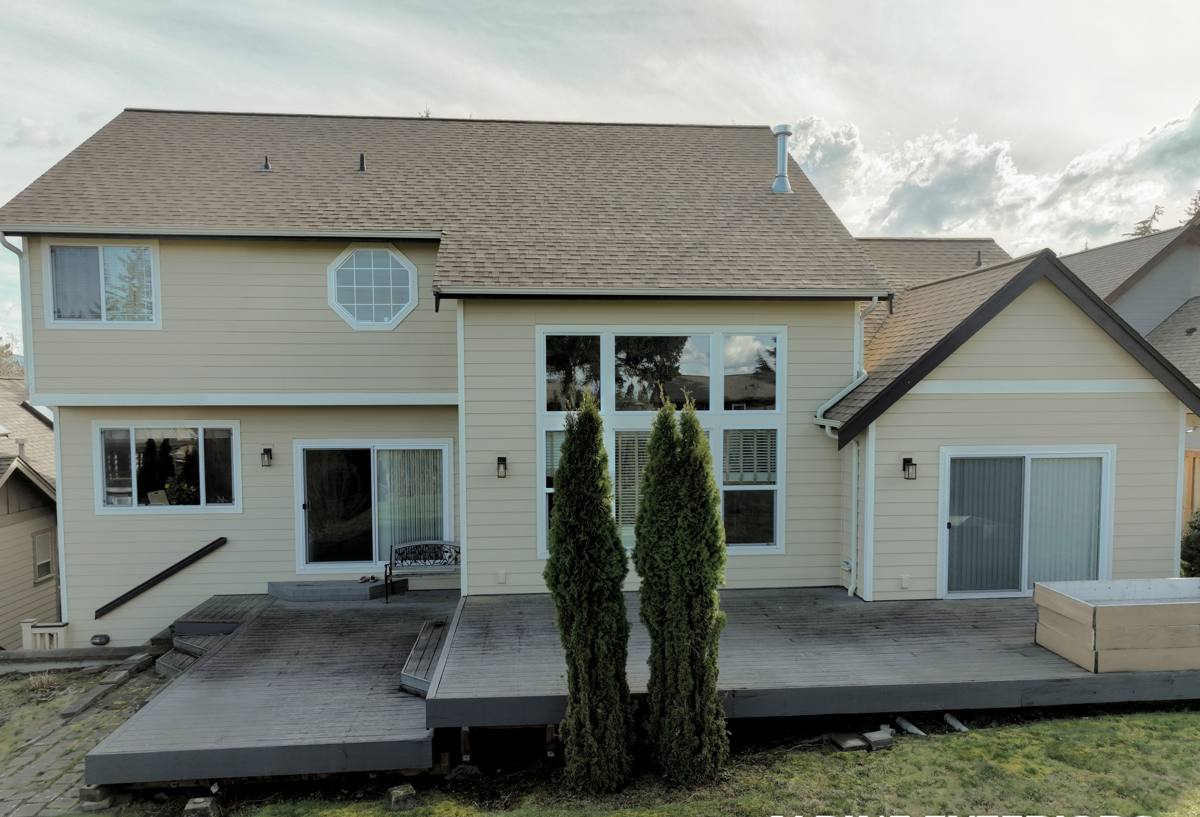
What Bellingham's Weather Does to Older Windows
Most of the window problems we find in Sehome trace back to the same handful of causes, repeated year after year:
- Wind-driven rain pushes water into places gravity-only drainage was never designed to handle, especially on older single-pane or early dual-pane units with worn weatherstripping.
- Salt air accelerates corrosion on aluminum hardware, hinges, and older metal frames faster than it would inland.
- Persistent shade and dampness from tree cover keeps wood sills and sashes wet longer after every storm, which is exactly the condition that lets rot and moss take hold.
- Condensation builds up on the inside of poorly insulated glass during our cool, humid winters, which over time can stain sills, warp wood, and feed mold growth if it's not addressed.
None of this means Sehome homes need anything exotic — it means the window system, from frame material to flashing detail, has to be matched to a wet, coastal-influenced climate rather than a generic national spec.
What "Energy-Efficient" Actually Means
The phrase gets used loosely in the window industry, so it's worth being specific about what it means for a Whatcom County home.
Glass and Gas Fill
Modern energy-efficient windows use dual- or triple-pane insulated glass units (IGUs) with a low-emissivity (low-E) coating and an inert gas fill, usually argon, between the panes. The low-E coating reflects heat back into the room in winter and blocks excess solar heat in summer, while the gas fill slows heat transfer through the glass itself. For our climate, where the bigger concern is heat loss through long, wet, overcast winters rather than intense summer sun, we prioritize a low-E coating and frame design that keeps interior surfaces warm and dry rather than one optimized purely for solar rejection.
Frame Material
Frame choice matters as much as the glass. Vinyl frames handle moisture well and don't corrode, which suits our climate, but quality varies a lot between manufacturers — cheaper vinyl can warp or discolor over time. Fiberglass frames are more dimensionally stable across our temperature swings and hold paint well if you want a custom color. Wood-clad frames look great and perform well when properly maintained, but they demand more upkeep in a climate this wet, since any breach in the cladding lets moisture reach the wood underneath. We'll walk through the honest trade-offs for your specific home rather than pushing one material for every job.
U-Factor and Air Leakage
U-factor measures how well a window resists heat flow — lower is better — and air leakage rating measures how much air passes through the assembly when closed. Both matter more in Bellingham than a single "energy efficient" sticker does, because a window with great glass but a poorly sealed frame will still leak heat and let wind-driven rain find its way in around the edges.
Signs a Sehome Home Needs New Windows
You don't need to guess. A handful of clear signs tell you it's time to look seriously at replacement:
- Visible condensation or fogging between the panes — this means the seal has failed and the gas fill is gone
- Drafts you can feel near the frame even when the window is fully latched
- Soft or discolored wood on the sill, jamb, or trim, especially on north- and west-facing windows that catch the most driving rain
- Moss or algae staining building up on the exterior sill or frame
- Windows that are difficult to open, close, or lock — a sign the frame has swelled, warped, or shifted
- A noticeable rise in heating costs without a clear explanation
Any one of these on its own might just need a repair. Several together, especially on an older home, usually mean the windows have reached the end of their useful service life.
Our Installation Process
1. On-Site Assessment
We start by looking at your existing windows from both sides — frame condition, sill condition, evidence of past water intrusion, and how the current units are performing. This tells us whether a full replacement is warranted and what glass and frame options make sense for that specific wall's sun and rain exposure.
2. Measuring and Product Selection
Every opening gets measured individually; older homes rarely have perfectly uniform rough openings. We'll go over glass packages, frame materials, and finish options against your budget and the performance you actually need, not the most expensive tier available.
3. Removal and Prep
Old units come out carefully to protect the surrounding siding and interior trim. Any rot or water damage found in the process gets flagged and addressed before the new window goes in — installing a new window over a compromised sill just hides the problem.
4. Flashing and Air Sealing
This is the step that determines whether a window actually performs in our climate. Proper flashing tape, sill pans, and weather-resistant barrier integration keep wind-driven rain from ever reaching the framing, and correct air sealing around the unit stops the drafts that a lot of "window replacements" leave behind when installers skip this detail.
5. Final Fit and Walkthrough
Every new window gets checked for square, level, and smooth operation, and we walk the job with you before calling it done.
Comparing Window Options for Sehome Homes
| Feature | Standard Dual-Pane | High-Performance Dual-Pane | Triple-Pane |
|---|---|---|---|
| Best suited for | Budget-conscious replacement, sheltered exposures | Most Sehome homes, including exposed and shaded walls | North/west exposures, homes prioritizing max efficiency |
| Moisture resistance | Adequate with good installation | Strong | Strongest |
| Relative upfront cost | Lowest | Moderate | Highest |
| Noise reduction | Basic | Improved | Best |
| Typical lifespan with good care | 20-25 years | 25-30+ years | 25-30+ years |
For most Sehome homes we recommend a high-performance dual-pane package as the sweet spot — it holds up well to our rain and humidity without the added cost of triple-pane glass, which tends to make more sense on homes with heavier noise concerns or maximum exposure to weather.
Cost Factors Worth Understanding
Window pricing varies widely based on a few real factors, not just "good, better, best" marketing tiers:
- Frame material — vinyl typically runs less than fiberglass or wood-clad
- Number and size of openings — larger or custom-shaped windows cost more to fabricate and install
- Condition of existing sills and framing — rot repair adds labor but is far cheaper to handle during replacement than later
- Glass package — dual-pane versus triple-pane, and coating options
- Access and site conditions — second-story or hard-to-reach windows take more time
We'll give you a clear, itemized estimate so you can see exactly what's driving the price rather than a single lump number.
Why Local Experience in Sehome Matters
A crew that regularly works in Sehome and the surrounding Bellingham neighborhoods already knows what this climate does to a window installation over the first few winters, not just on install day. That means we flash for driving rain as a default, not an upsell; we know which exposures in the neighborhood tend to hold moisture longest; and we've seen what happens when moss and shade are left out of the maintenance conversation. Whatcom County's climate isn't extreme, but it's persistent — steady rain and dampness for months at a stretch wear down shortcuts in a way that a drier climate simply wouldn't reveal as quickly. Hiring a crew with that local track record is part of getting a window installation that still performs correctly ten winters from now.
Keeping New Windows Performing Long-Term
Energy-efficient windows still need basic upkeep to deliver on their performance over the years, especially here:
- Clear debris and moss from sills and tracks a couple times a year, more often under heavy tree cover
- Check weatherstripping annually for compression or wear
- Keep gutters and downspouts clear so runoff isn't sheeting directly onto window heads
- Watch for condensation between panes, which signals a seal failure worth addressing under warranty
- Repaint or reseal wood-clad frames on the manufacturer's recommended schedule
If your Sehome home has drafty, foggy, or aging windows, we're glad to take a look and put together a straightforward, no-pressure estimate — just fill out the form below and we'll get in touch.