 Bellingham Exterior
 Metal Roofing in Sehome, Bellingham
Sehome sits close enough to the water and to Bellingham's tree cover that its roofs take a specific kind of beating: salt-laden air off the bay, driving rain that comes in sideways during winter storms, and a moss season that seems to run longer every year. A metal roof handles all three better than most other roofing materials, but only if it's specified and installed correctly for this exact climate. This page covers what that actually means for a home in Sehome, not generic metal roofing advice that could apply anywhere.
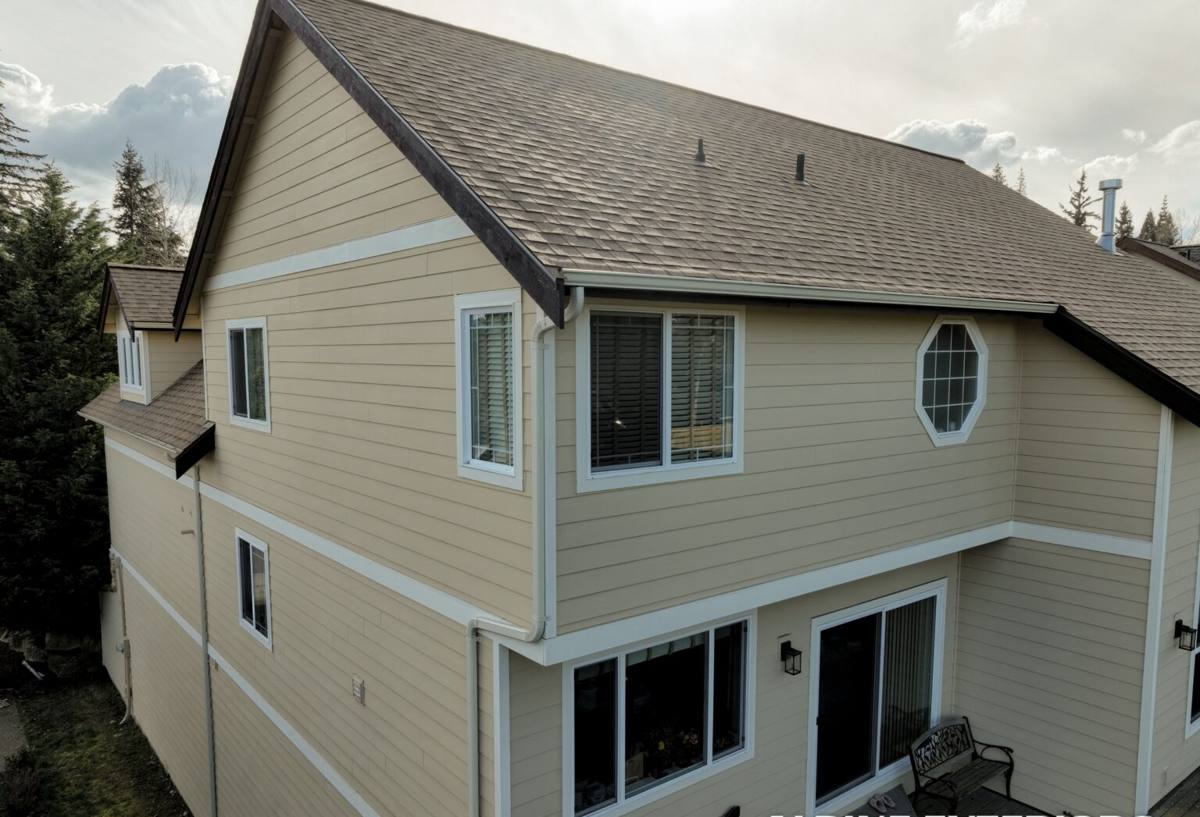
What This Climate Does to a Roof
Whatcom County's marine environment is mild compared to a lot of the country, but "mild" doesn't mean easy on a roof. Three things do most of the damage here:
- Salt air: Airborne salt accelerates corrosion on any metal that isn't properly coated or is fastened with the wrong hardware. It also degrades exposed sealants and adhesives faster than it would inland.
- Driving rain: Wind-driven rain doesn't just fall on a roof, it gets pushed sideways and upward under flashing, at valleys, and around penetrations. A roof that only sheds water straight down will eventually leak here.
- Moss and organic buildup: Shade, moisture, and mild temperatures year-round are a perfect combination for moss, algae, and lichen. On the wrong material, that growth holds moisture against the roof surface for months at a time.
None of this is unique to Sehome, but it's more concentrated here than in drier inland parts of Whatcom County, which is why the details of the installation matter more than the brand name on the panel.
Why Metal Handles This Better Than Most Alternatives
A correctly installed metal roof sheds wind-driven rain more reliably than shingles because it has fewer overlapping edges for water to work its way under, and its smooth, hard surface doesn't hold moisture the way granular shingle surfaces do. That same smooth surface also gives moss and algae far less to grip onto compared to asphalt shingles or wood-look products, though it doesn't make a roof moss-proof on its own — shade and debris still matter.
Metal Roofing Options and How They Perform Here
"Metal roofing" covers a few different systems, and they don't perform the same way in a coastal, rainy, shaded environment. Here's how the common options compare for a Sehome home specifically.
| System | Fastener Exposure | Coastal Durability | Moss Resistance | Typical Lifespan |
|---|---|---|---|---|
| Standing seam (concealed fastener) | None — fasteners are hidden under interlocking seams | Excellent when properly coated and detailed | Very good — smooth, steep-shedding surface | 40-60+ years |
| Exposed-fastener panel (screw-down) | Fasteners penetrate the panel face | Good, but gasket seals wear and need eventual replacement | Good | 25-40 years |
| Stone-coated steel | Varies by product | Good with correct underlayment and flashing | Good, though coated texture can trap more debris than smooth panel | 30-50 years |
We don't push one system on every roof. A steep, simple gable roof in Sehome is a great candidate for standing seam. A complex roofline with a lot of penetrations sometimes calls for a different approach where the extra labor of a fully concealed-fastener system isn't the best use of the budget. We'll walk through the actual trade-offs for your roof rather than defaulting to whichever system is easiest to sell.
What a Correct Installation Actually Involves
Metal roofing is unforgiving of shortcuts in a wet climate. Problems rarely show up as an obvious leak on day one — they show up two or three winters later, once driving rain has found the one weak point. The details that matter most:
Underlayment
Metal roofing needs a high-temperature, self-adhering underlayment at eaves, valleys, and around penetrations — not just felt paper. In a driving-rain climate, this layer is what catches the water that gets past the panels during a storm, not a backup that's never supposed to matter.
Flashing and Valleys
Most metal roof failures we're called to fix started at a flashing detail, not in the field of the panels. Valleys, wall-to-roof transitions, chimneys, and skylights all need flashing sized and lapped for wind-driven rain, not just gravity-fed water.
Fasteners and Hardware
Near the water, fastener material matters as much as panel material. Mismatched metals cause galvanic corrosion over time — a stainless or coated fastener paired with the wrong panel alloy will eventually stain, loosen, or fail well before the panel itself does.
Ventilation
A metal roof over a poorly ventilated attic can trap condensation underneath the panels, which causes problems that look like a leak but are really a moisture management issue. Ridge and intake venting need to be sized for the home, not treated as an afterthought.
Moss and Debris Management
Even a moss-resistant surface still needs airflow and periodic debris clearing to stay that way, especially on roof sections shaded by trees or neighboring structures. A few practical points for Sehome homeowners:
- Needles and leaf litter that collect in valleys or against a chimney base hold moisture even on metal, and are the most common spot we find moss starting.
- Trimming back overhanging branches reduces both shade and debris load, and it's usually the single most effective thing a homeowner can do between roofing jobs.
- Metal roofs should never be pressure-washed or scrubbed with stiff brushes — it can damage factory coatings. A soft wash or gentle rinse is enough for routine cleaning.
- Gutters matter as much as the roof surface itself; a clogged gutter backs water up under the drip edge regardless of what the roof is made of.
Our Process for a Sehome Metal Roof
Every job starts with an actual inspection of the roof deck, not just a look at the shingles or panels on top of it. That's the only way to know whether the existing structure can take a new roof as-is or needs repair first.
- Assessment: We check the deck, existing ventilation, flashing conditions, and any signs of past moisture intrusion before quoting anything.
- Tear-off decision: In most cases, metal roofing over an existing roof isn't the right call in this climate — we'll explain why if a full tear-off makes more sense for your roof.
- Underlayment and flashing detailing: This is where the coastal-climate details above get built in, before a single panel goes down.
- Panel installation: Correct fastener spacing, panel alignment, and expansion allowance for temperature swings.
- Final walk-through: We go over the finished roof and the maintenance basics with you before we consider the job done.
Why Hiring a Crew That Already Works in Sehome Matters
Roofing code requirements, typical roof pitches, and the specific mix of coastal and tree-cover exposure vary block by block in Bellingham. A crew that regularly works Sehome roofs already knows which details tend to fail here and doesn't have to learn that on your roof. That familiarity shows up in small decisions — how much valley flashing is enough, where ventilation tends to be undersized in homes of a certain era, which fastener hardware actually holds up near the water — that a generic quote sheet won't capture.
What Drives the Cost
Metal roofing costs more upfront than asphalt shingles, and the price range on any given home depends on a handful of factors more than on the brand name of the panel:
| Factor | Why It Matters |
|---|---|
| Roof complexity | More valleys, dormers, and penetrations mean more flashing labor, which is where most of the skilled labor cost sits |
| Tear-off vs. new construction | Removing an old roof and repairing any deck damage adds cost but is often necessary for a proper install |
| Panel system | Standing seam generally costs more than exposed-fastener panel systems due to labor and material |
| Roof pitch and access | Steep or hard-to-access roofs take longer and require more safety equipment |
| Ventilation upgrades | Older Sehome homes sometimes need added intake or ridge venting as part of the job |
We give a written, itemized quote so you can see what you're actually paying for rather than a single lump number.
Questions to Ask Before You Hire
Whether you talk to us or another contractor, these are worth asking on any metal roofing quote for this area:
- Will the underlayment and flashing be spec'd for wind-driven rain, or is it a standard package regardless of exposure?
- What fastener material is being used, and is it compatible with the panel alloy to avoid galvanic corrosion?
- Is the existing roof deck being inspected before the quote, or only estimated from the outside?
- Will attic ventilation be assessed and addressed if it's undersized?
- What's the manufacturer's coating warranty, and what does it actually cover versus what's excluded?
If you're weighing metal roofing for a home in Sehome, we're glad to take a look and walk you through what your specific roof needs — no pressure, and no charge for the estimate.