 Bellingham Exterior
 Why Silver Beach Roofs Wear Differently
Silver Beach sits close enough to open water that homes here take a steady diet of moist, salt-tinged air on top of everything else Whatcom County weather throws at a roof. That combination — damp marine air, long stretches of driving rain off the water, and shade from mature evergreens — adds up to conditions that are noticeably harder on a roof than a drier inland lot just a few miles away. We see it in the pattern of calls we get from this neighborhood: moss coming back faster than it should, fasteners and flashing corroding ahead of schedule, and shingles losing granules years before their rated lifespan.
None of that means Silver Beach homes need exotic materials or unusual construction. It means the installation has to be done with those specific stressors in mind, from the underlayment up. A new roof installed the same way you'd do it on a dry, open lot inland won't perform the same way here, and the difference shows up as callbacks and premature repairs a few years down the road.
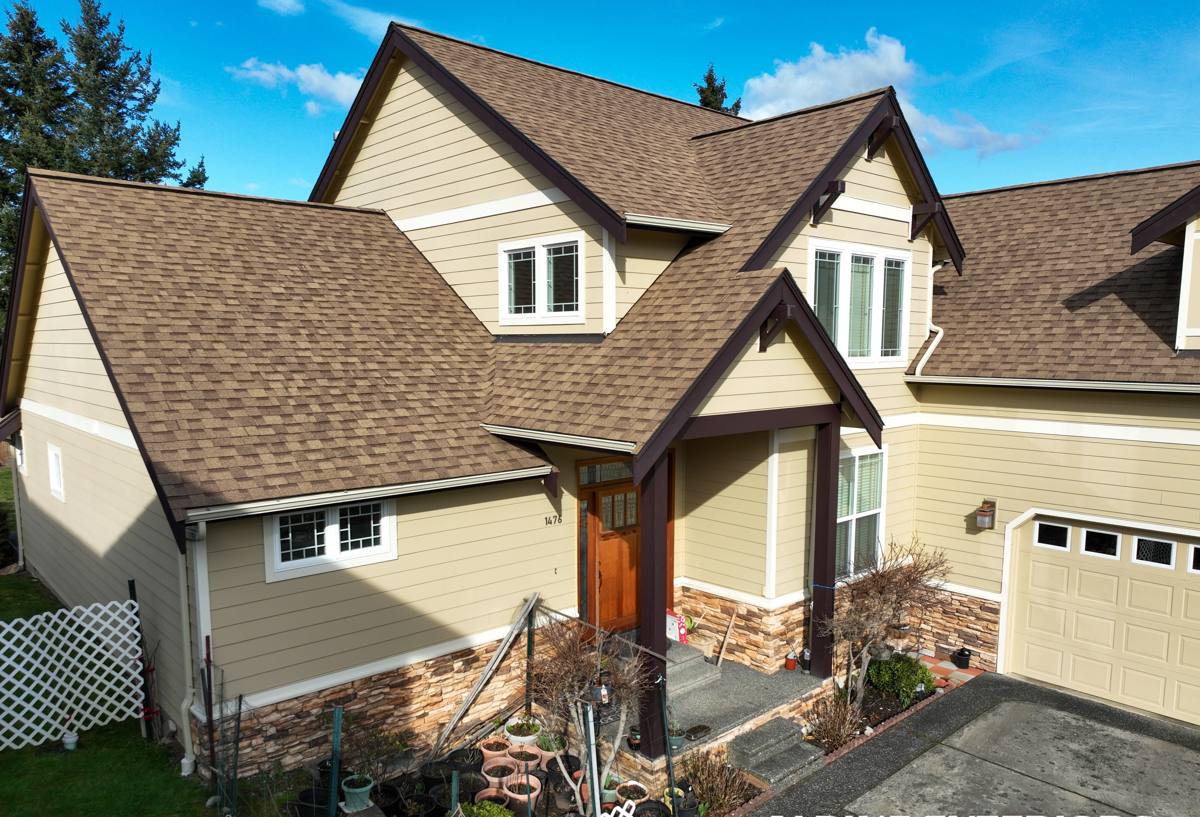
Signs a Silver Beach Roof Needs Replacement, Not Another Repair
Age and material fatigue
Most composition shingle roofs in this climate are realistically good for 18-25 years, even with regular maintenance, because of the added moisture exposure. If your roof is in that range and you're patching the same areas more than once a season, replacement is usually the more honest answer than another repair.
Granule loss and bald patches
Check your gutters after a hard rain. A steady accumulation of granules is a sign the shingles are losing their UV and weather protection layer, which accelerates fast once it starts.
Persistent moss and dark streaking
Light surface moss on a shingle roof is normal here and manageable with cleaning. Moss that's established itself under the shingle tabs, or that keeps returning within a season of cleaning, usually means the roofing surface underneath is already compromised and holding moisture.
Soft decking, sagging, or interior staining
Any soft spots underfoot, visible sagging along the roofline, or ceiling stains inside the home point to moisture that's already reached the deck. At that point a repair is a temporary patch on a bigger problem.
What a Correct New Roof Installation Actually Involves
A new roof is more than laying down new shingles over the old structure. Done right, it's a sequence of steps that each matter on their own, and skipping or rushing any one of them is where most premature failures start.
Full tear-off and deck inspection
We remove the existing roofing down to the deck rather than layering over it. That's the only way to actually see the condition of the sheathing, catch rot or soft spots from past moisture intrusion, and confirm the deck is sound enough to hold fasteners properly for the next 20-plus years.
Ice-and-water barrier and underlayment
Given how much rain this area gets, self-adhering ice-and-water membrane at eaves, valleys, and roof penetrations isn't optional — it's the backup layer that keeps wind-driven rain from working its way under the shingles during the worst storms. The rest of the deck gets a synthetic underlayment as a secondary water barrier beneath the roofing material itself.
Flashing at every transition
Chimneys, skylights, sidewalls, and valleys are where the vast majority of leaks actually start — not in the open field of the roof. Flashing needs to be new, correctly lapped, and sealed at every one of these transitions, not reused from the old roof to save time.
Proper fastening for wind and moisture exposure
Homes with more open exposure to wind off the water need fastening patterns and, in some cases, hardware rated for higher wind uplift. We match the fastening schedule to the site, not just the shingle manufacturer's minimum spec.
Choosing the Right Material for This Climate
There's no single "best" roofing material — the right choice depends on how much moss and moisture exposure you're willing to manage long-term versus what you want to spend up front. Here's how the common options actually perform in a Silver Beach setting:
| Material | Moss & Algae Resistance | Coastal/Moist-Air Durability | Typical Lifespan Here | Maintenance Level |
|---|---|---|---|---|
| Standard asphalt composition shingle | Moderate (better with algae-resistant granules) | Good with correct fastener and flashing metal choices | 18-25 years | Periodic cleaning, gutter checks |
| Algae-resistant ("AR") shingle | Good — copper/zinc granules slow regrowth | Good | 20-25 years | Lower than standard shingle |
| Standing-seam metal | Very good — little for moss to grip | Excellent with proper coating and fastener metal | 40-50+ years | Low |
| Cedar shake | Poor without diligent upkeep | Requires regular treatment in moist climates | 20-30 years with maintenance | High |
We don't install cedar shake as a default recommendation in this neighborhood, not because it's a bad product in the right setting, but because the maintenance commitment it needs to actually hit its lifespan — regular treatment, aggressive moss control, careful ventilation — is a lot to ask in a climate this consistently damp. Asphalt with algae-resistant granules or standing-seam metal give most homeowners here a better balance of upfront cost, appearance, and realistic long-term upkeep.
Ventilation: the Half of the Job You Don't See
A roof that looks perfect from the curb can still fail early if the attic underneath isn't ventilating correctly. Trapped moist air condenses against the underside of the deck, which rots sheathing from the inside and feeds the exact moss and algae growth homeowners are trying to avoid. Correct installation means balancing intake vents (usually at the eaves) with exhaust at the ridge, sized to the attic's actual square footage — not just adding a vent or two because the old roof had one.
On homes with the older, tighter roof lines common in this part of Bellingham, this sometimes means upgrading ventilation as part of the reroof, not just replacing what was there before. It's a detail that doesn't show up in a quick estimate but has a real effect on how long the new roof lasts.
Our Installation Process
- On-site inspection and honest assessment — repair versus replace, with photos and a plain-English explanation of what we're seeing.
- Written estimate covering material options, ventilation needs, and any deck repair contingencies before work starts.
- Full tear-off, deck inspection, and repair of any damaged sheathing before new material goes down.
- Ice-and-water membrane, underlayment, new flashing, and ventilation components installed to spec.
- Roofing material installed with fastening and detailing matched to the site's wind and moisture exposure.
- Final walkthrough, cleanup, and magnetic sweep of the property for stray fasteners.
Moss, Algae, and Ongoing Roof Care
A new roof gives you a clean start, but moss season comes back every year in this part of Whatcom County. A little seasonal attention keeps a new roof performing closer to its full rated lifespan:
- Clear gutters and downspouts at least twice a year — clogged gutters back water up under the shingle edge.
- Trim back overhanging branches to cut down on shade and debris buildup, both of which feed moss growth.
- Have moss growth treated gently (not pressure-washed, which can strip granules) as soon as it appears rather than letting it establish.
- Check attic ventilation isn't blocked by insulation or storage — airflow is what keeps the deck dry from underneath.
- Walk the roofline visually after major windstorms for lifted or missing shingles rather than waiting for a leak to show up inside.
Permits and Local Code
Reroofing work in Bellingham and unincorporated Whatcom County generally requires a building permit and inspection, along with compliance with current wind and snow load provisions in the adopted building code. We handle the permit process as part of the job so homeowners aren't left navigating it on their own, and we build to current code rather than just matching what was there before.
Why Local Experience Matters for This Neighborhood
Every roofing crew can install shingles. What's different in a neighborhood like Silver Beach is knowing, before the tear-off even starts, which details matter most for the site — where wind exposure calls for extra fastening, which roof lines need upgraded ventilation, and what flashing details hold up against the wetter, saltier air near the water instead of just meeting minimum code. That judgment comes from having worked on the roofs a few streets over, not from a generic checklist.
If you're weighing a repair against a full replacement, or just want a straight answer on what your roof's condition actually calls for, we're happy to take a look. Reach out for a free, no-pressure estimate — use the form below to get started.