 Bellingham Exterior
 South Hill's Siding Problem Is Different From the Rest of Bellingham
South Hill sits up on the slope above downtown Bellingham, with mature tree canopy on many lots, older housing stock going back decades, and a clear line of sight down toward Bellingham Bay on the better-situated properties. That combination creates a specific set of stresses on exterior siding that a generic install job doesn't account for. Homes higher on the hill catch more wind-driven rain off the water. Homes tucked under big conifers and maples get less direct sun, more standing shade, and a longer moss season on north-facing walls. Put those two things together and you get siding that's constantly cycling between wet and dry, with algae and moss given a head start almost everywhere the sun doesn't reach for long.
Whatcom County's marine climate means siding here isn't dealing with occasional storms — it's dealing with near-constant low-grade moisture for months at a stretch. Salt-laden air off the bay accelerates corrosion on fasteners and trim metal that isn't rated for it. None of this is unique to South Hill by itself, but the elevation, shade pattern, and age of the housing stock on this particular hillside combine to punish siding faster than flatter, more open parts of Bellingham.
Why This Matters More on Older South Hill Homes
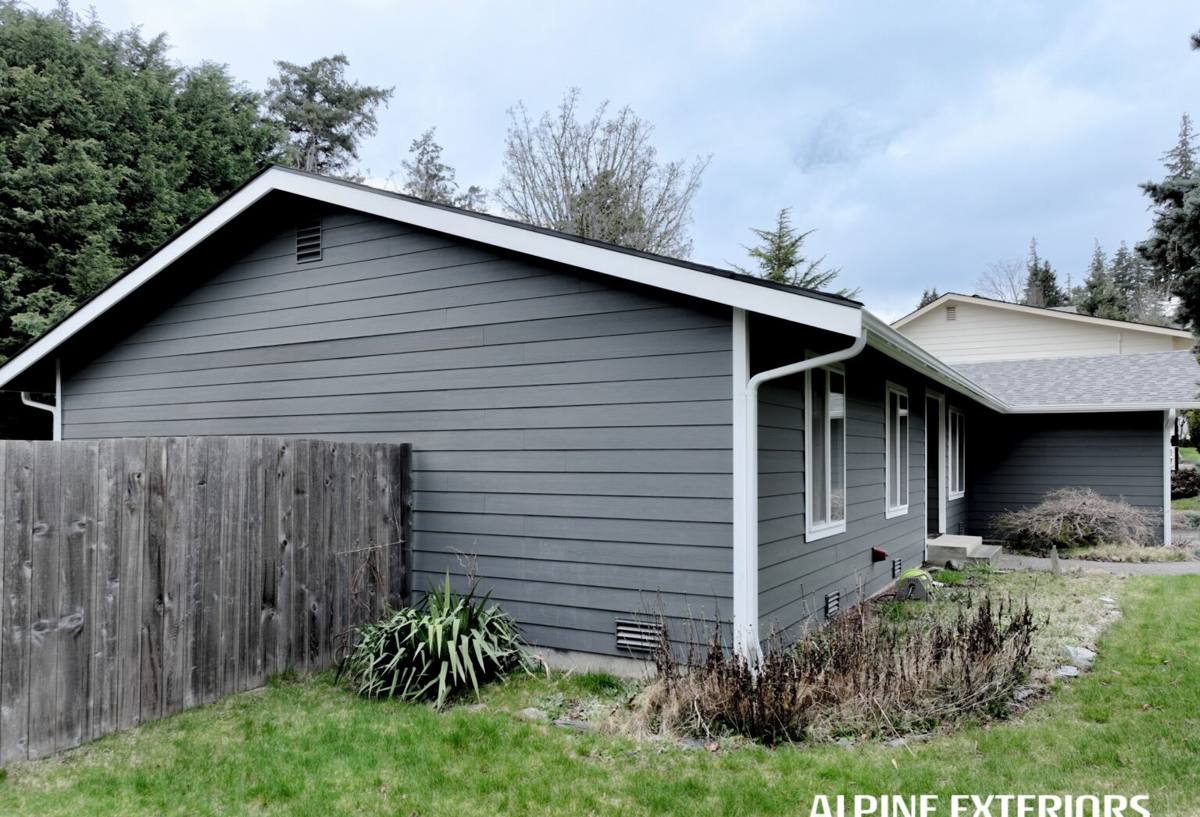
A lot of South Hill's housing stock predates modern weather-resistive barrier standards. Original siding on these homes — whether it was wood lap, old masonite, or a first-generation vinyl retrofit — was often installed without a real drainage plane behind it. Add decades of moss growth holding moisture against the wall, and you get slow, hidden water intrusion that shows up as soft trim, stained sheathing, or paint that won't hold no matter how many times it's redone.
When we're re-siding a South Hill home, the visible siding is rarely the whole story. We're also looking at:
- Whether the existing weather-resistive barrier (or lack of one) has let moisture into the wall assembly over time
- Window and door flashing that was never properly integrated with the original siding
- Trim and fascia condition, especially on north- and west-facing walls that stay wet longest
- Ventilation and rainscreen gaps behind the cladding, particularly on shaded, tree-covered lots
Fixing the siding without addressing what's underneath it just buys a few more years before the same problem resurfaces. That's the case for doing this job right the first time, not the cheapest way available.
What a Correct James Hardie Installation Actually Involves
James Hardie fiber cement is engineered specifically for climates like ours — Hardie's HZ10 formulation is built for regions with sustained moisture exposure, which is exactly what South Hill deals with. But the product being right for the climate doesn't matter if the installation isn't. A correct job includes:
Drainage and moisture management
A proper weather-resistive barrier and rainscreen gap behind the siding, so any moisture that does get past the cladding has somewhere to go instead of sitting against the sheathing. This is the single most important thing separating a siding job that lasts 30+ years from one that starts failing in ten.
Flashing at every penetration
Windows, doors, hose bibs, vents, and any other wall penetration need integrated flashing that ties into the drainage plane. On a shaded hillside home where walls stay damp longer, sloppy flashing is where the first rot shows up.
Fastening to spec
Hardie has specific nailing patterns, fastener types, and blind- vs. face-nailing requirements depending on the product line and exposure. Corrosion-resistant fasteners matter more here given the salt air coming off the bay — the wrong fastener rusts and streaks the siding, or worse, loses holding power over time.
Factory-finished ColorPlus
We install Hardie's ColorPlus prefinished products wherever the color and trim selection allows it. A factory-baked finish holds color and resists the moss and mildew staining that plagues field-painted siding in shaded, damp spots — which describes a good number of South Hill lots.
Hardie Product Lines We Use on South Hill Homes
Not every home needs the same Hardie product. We match the line to the home's style, exposure, and existing trim details.
| Product | Best fit | Why it works here |
|---|---|---|
| HardiePlank lap siding | Most South Hill homes, traditional and craftsman-influenced styles | Classic horizontal lap look, wide range of ColorPlus finishes, proven track record in wet marine climates |
| HardiePanel vertical siding | Accent walls, gables, modern-leaning remodels | Clean vertical lines for contrast against lap siding, works well on gable ends that take the most weather |
| HardieShingle siding | Homes with a cottage or shingle-style character | Gives the shingle look without the moisture retention and maintenance burden of real wood shingles under tree cover |
| HardieTrim boards | Corners, window and door surrounds, fascia | Matches siding durability so trim doesn't rot out years before the field siding does |
Our Process, Start to Finish
- Walkthrough and assessment — we inspect existing siding, trim, and visible signs of moisture damage, and check how much of the home is shaded or tree-covered, since that changes the moss and drainage strategy.
- Written estimate — product lines, colors, trim details, and a clear scope of what's included, with no vague allowances.
- Tear-off and sheathing check — once old siding comes off, we inspect sheathing condition before anything new goes up. Any soft or water-damaged sheathing gets addressed, not covered over.
- Weather-resistive barrier and rainscreen installation — the drainage system goes in correctly before a single piece of Hardie touches the wall.
- Flashing integration — windows, doors, and penetrations get properly flashed and tied into the drainage plane.
- Hardie siding, trim, and fastening to manufacturer spec — installed to the nailing pattern and fastener requirements for the specific product and exposure.
- Final walkthrough — caulking, touch-up, and a walk of the finished job with the homeowner before we consider it done.
Why a Crew That Already Works South Hill Makes a Difference
South Hill's terrain isn't flat and its lots aren't uniform. Steep driveways, retaining walls, mature trees close to the house, and limited street parking on some blocks all affect how a job gets staged and scaffolded. A crew that's worked the neighborhood before knows how to plan access and material staging without damaging landscaping or blocking a narrow street for days.
There's also a practical read on moisture and shade patterns that only comes from working a lot of these homes: which orientations grow moss fastest, where ventilation tends to be worst, which older subdivisions used weaker original construction details. That local pattern recognition shortens the assessment phase and helps us catch problems before they're hidden behind new siding.
Bellingham's building permit and inspection process is the same city-wide, but a crew that pulls Bellingham permits regularly moves through that process faster and avoids the delays that come from unfamiliarity with local requirements.
Maintenance: What South Hill Homeowners Should Actually Do
Correctly installed Hardie siding is low-maintenance, not zero-maintenance. Given the shade and moisture on many South Hill lots, a little seasonal attention goes a long way:
- Rinse siding annually, focusing on shaded north- and west-facing walls where moss and algae take hold first
- Keep tree branches and shrubs trimmed back from siding to improve airflow and sun exposure
- Check and clear gutters before the fall rains — overflow running down the wall is one of the fastest ways to feed moss growth and stain ColorPlus finishes
- Re-caulk around trim and penetrations if you notice cracking or gaps, rather than waiting for a leak
- Watch for any soft spots or discoloration at the base of walls near grade, where splashback and standing moisture are most common
What This Kind of Job Costs
Every South Hill home is different — square footage, number of stories, trim complexity, and how much of the original wall assembly needs repair all move the number. In general terms, cost is driven by:
| Factor | Why it matters |
|---|---|
| Home size and stories | More square footage and multi-story access both add labor time |
| Existing wall condition | Rotted sheathing or trim found during tear-off adds repair scope |
| Product line selection | Lap, panel, and shingle profiles carry different material costs |
| Trim and detail complexity | Craftsman-style trim packages take more time than simple corners and fascia |
| Site access | Steep lots, tree cover, and limited staging space can add setup time |
We don't quote a number without seeing the home first — anyone who does is guessing, and on an older South Hill house, guessing usually means surprises once tear-off starts.
If your South Hill home's siding is showing moss staining, soft trim, or paint that won't hold, we're happy to take a look and give you a straightforward, no-pressure estimate. Fill out the form below and we'll set up a time to walk the property together.