 Bellingham Exterior
 Storm Damage Roofing in Silver Beach: What Makes This Neighborhood Different
Silver Beach sits among mature trees and close to the water, which means the storms that roll through Whatcom County hit these roofs from more than one direction at once. It's not just wind. It's wind driving rain sideways under shingle edges, branches and cones dropping from tall conifers during gusts, and salt-laden air off Bellingham Bay working on exposed metal and fasteners year-round. Add in a moss season that can run eight months or more in a shaded, tree-covered neighborhood like this one, and you end up with roofs that take a different kind of beating than a roof out in an open, sunny subdivision.
We repair storm-damaged roofs across Bellingham, but Silver Beach jobs tend to have a signature: localized wind lift near roof edges and ridges, impact damage from limbs and debris, and moss or organic buildup that was already softening shingles before the storm ever hit. A good repair here has to address all three, not just patch the obvious hole.
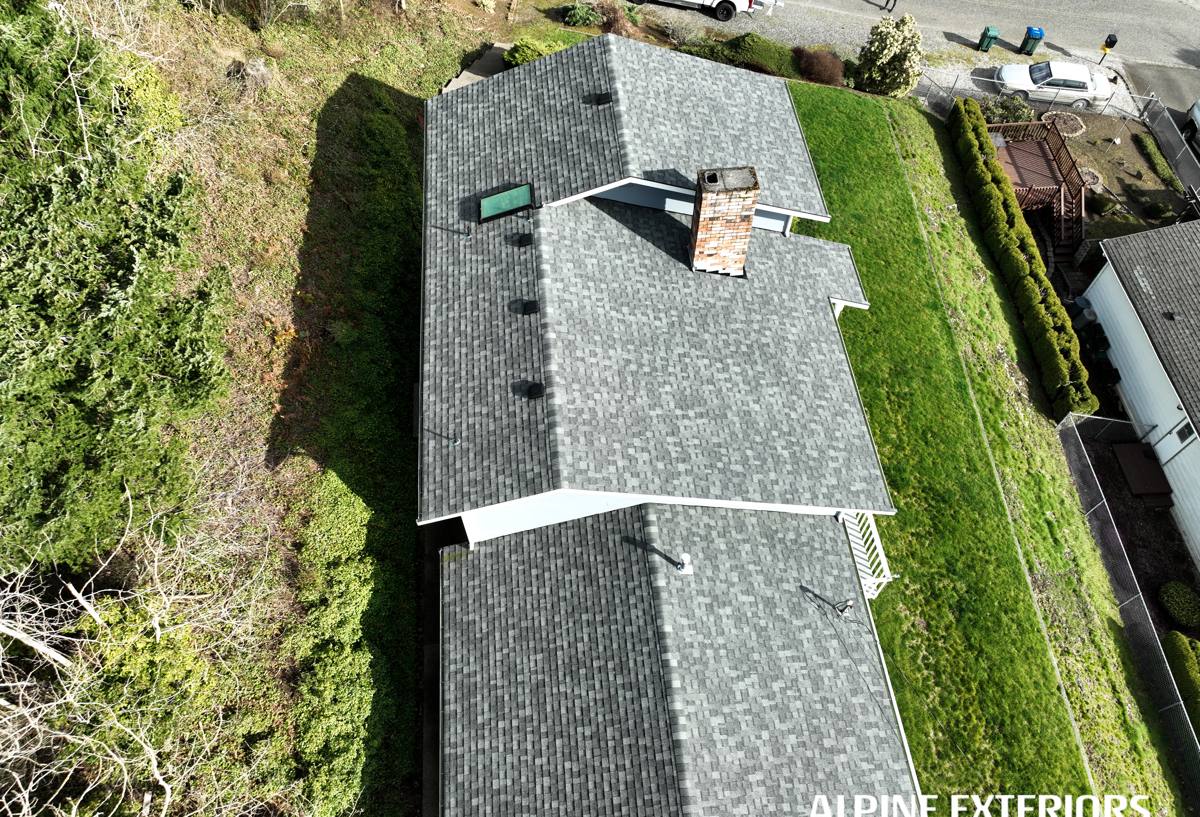
What Actually Counts as Storm Damage
Homeowners often assume storm damage means a hole you can see from the ground. In practice, most of what we find after a Whatcom County windstorm is less dramatic but just as serious if it's ignored.
Common storm damage types we see in this area
- Shingles lifted or creased along the edges and ridge, where wind gets underneath and breaks the seal without tearing the shingle off entirely
- Punctures or bruising from falling branches, cones, or wind-blown debris
- Flashing knocked loose or bent around chimneys, vents, and skylights, opening a path for water even though the shingles nearby look fine
- Gutters and downspouts pulled loose or clogged with storm debris, causing water to back up under the roof edge
- Fastener and nail pops from repeated wind flexing over multiple storm events, not just one
The tricky part is that several of these are invisible from the driveway. A roof can look intact after a storm and still be actively leaking into the attic a month later, once moss and moisture have had time to work into a compromised seam.
Why Moss Season Complicates Storm Repairs Here
In a lot of Bellingham neighborhoods, moss is a cosmetic nuisance. In Silver Beach, with its tree cover and shaded rooflines, it's a structural concern. Moss holds moisture against the shingle surface long after the rest of the roof has dried out, and that constant dampness accelerates granule loss and softens the mat underneath. A shingle that's already moss-weakened is far more likely to tear or lift in a wind event than a clean one nearby.
This matters directly for storm repair because it changes what "repair" needs to mean. Patching a wind-torn shingle next to a moss-compromised section without addressing the moss just sets up the next failure. Part of a proper storm repair in this neighborhood is checking the surrounding roof for moss and organic growth, not just the damaged spot itself, and treating or clearing it as part of the same visit when it's contributing to the problem.
How We Handle a Storm Damage Repair Call
1. Inspection, from the ground up and the attic down
We walk the roof surface and check it from the attic side too, since interior staining, damp insulation, or daylight through the decking often tells us more about the real extent of damage than what's visible from outside.
2. Documentation before any work starts
We photograph and note every area of damage before touching anything. If you're filing an insurance claim, this record supports it. If you're paying out of pocket, it gives you a clear picture of what you're paying for and why.
3. Temporary protection when needed
If a roof has active exposure and repair can't happen the same day, we'll get a tarp or temporary cover on the compromised area so the interior of the home isn't taking on water while parts or scheduling catch up.
4. The actual repair
Depending on what we find, this might mean replacing individual shingles, resealing and refastening lifted sections, re-flashing a chimney or vent, or a combination of all three. We match materials as closely as possible to the existing roof rather than leaving a visibly mismatched patch.
5. A post-repair check of the surrounding roof
Before we consider the job done, we look at the rest of the roof for the kind of early wear — moss patches, granule loss, soft spots — that tends to turn into the next storm's damage if it's left alone.
Repair or Replace? An Honest Look at the Decision
Not every storm-damaged roof needs a full replacement, and not every roof can be reasonably patched. The right call depends on the roof's age, how widespread the damage is, and what condition the rest of the roofing was in before the storm hit.
| Factor | Leans toward Repair | Leans toward Replacement |
|---|---|---|
| Roof age | Under 12–15 years, otherwise in good condition | Near or past typical shingle lifespan |
| Extent of damage | Isolated to one section or slope | Scattered across multiple slopes or widespread |
| Pre-storm condition | Roof was sound before the storm | Moss, granule loss, or wear were already significant |
| Underlying decking | Dry, solid decking under the damaged area | Soft, stained, or rotted decking found during inspection |
| Insurance scope | Claim covers a defined repair area | Adjuster's scope already points to full replacement |
We'll give you our honest read on which side of that table your roof falls on. If a repair is the right call, we won't upsell a full replacement — and if the damage or underlying condition doesn't support a patch job holding up through the next storm season, we'll tell you that too.
Materials and Methods We Use
For storm repairs we generally match your existing roofing material and stick to manufacturer-specified fastening and flashing methods rather than shortcuts that save time on the visit but don't hold up to the next round of wind. On homes where the existing roof used a lower-durability product or a flashing detail that's prone to repeat failure in wind-driven rain, we'll explain the trade-off honestly — what it costs to upgrade that detail now versus what it's likely to cost in repeat service calls later. That's a judgment call we make with you, not a sales pitch.
Insurance Claims and Storm Repairs
Many Silver Beach storm repairs go through homeowners insurance, especially after a significant wind event affects multiple properties in the same area. We can document damage in a way that supports your claim and work directly with your adjuster's scope of work when needed. We're not a public adjuster and won't promise a specific claim outcome, but we can make sure the physical evidence of damage is recorded clearly and that our repair estimate lines up with what actually needs to be fixed.
What to Do in the First 24–48 Hours After a Storm
- Check your attic and ceilings for new water stains, damp spots, or daylight coming through the roof deck
- Look at your yard and roof edges from the ground for shingle pieces, granules, or flashing on the lawn
- Clear debris away from gutters and downspouts if it's safe to do so from the ground
- Take photos of any visible damage before cleanup, for insurance purposes
- Get a tarp on any obviously exposed area, or call a roofer for temporary protection, rather than waiting out the next rain
- Avoid getting on the roof yourself, especially with wet moss or debris still on the surface
Why It Helps to Hire a Crew That Already Works This Neighborhood
A roofer who works Silver Beach regularly already knows what the tree cover, lake-adjacent moisture, and salt air do to roofs here over time, so a storm inspection isn't the first time they're thinking about how this neighborhood's roofs age. That matters when you're trying to tell the difference between fresh storm damage and older wear that a claims adjuster or a homeowner might otherwise lump together. It also means faster response — we're not driving across the county to reach you, and we're used to the access and tree-limb realities of these lots when we're scheduling a repair or a tarp job.
Bellingham and Whatcom County get enough wind and rain events in a typical year that storm repair isn't a rare specialty call for us — it's regular work, and we treat it with the same care whether it's a single lifted shingle or a full slope that needs attention.
If a recent storm has left you with a leak, missing shingles, or just a nagging feeling you should get your roof looked at, we're glad to come out for a free, no-pressure estimate. Use the form below and we'll get a time on the calendar.