 Bellingham Exterior
 Why Sudden Valley's Setting Is Hard on Exterior Siding
Sudden Valley sits in a forested basin around Lake Whatcom, a few miles from Bellingham Bay and the open water of the Salish Sea. That combination — thick stands of Douglas fir and cedar, a large freshwater lake, and moisture-laden marine air pushing in off the coast — creates a microclimate that's noticeably damper and shadier than a lot of the surrounding county. Homes tucked under tree canopy or facing north often stay wet longer after a storm than homes out in the open, and that has real consequences for whatever material is covering the walls.
Shade, Moss, and Slow-Drying Walls
Whatcom County gets a long, wet stretch from fall through spring, and driving rain off the water only adds to it. In Sudden Valley specifically, tall trees block direct sun on large sections of most homes for much of the year, which means siding stays damp longer after rain than it would on a fully exposed lot. That extended dampness is exactly what moss, algae, and mildew need to take hold, and it's part of why we see more green staining and soft, moisture-damaged trim on shaded lots here than in more open parts of the Bellingham area.
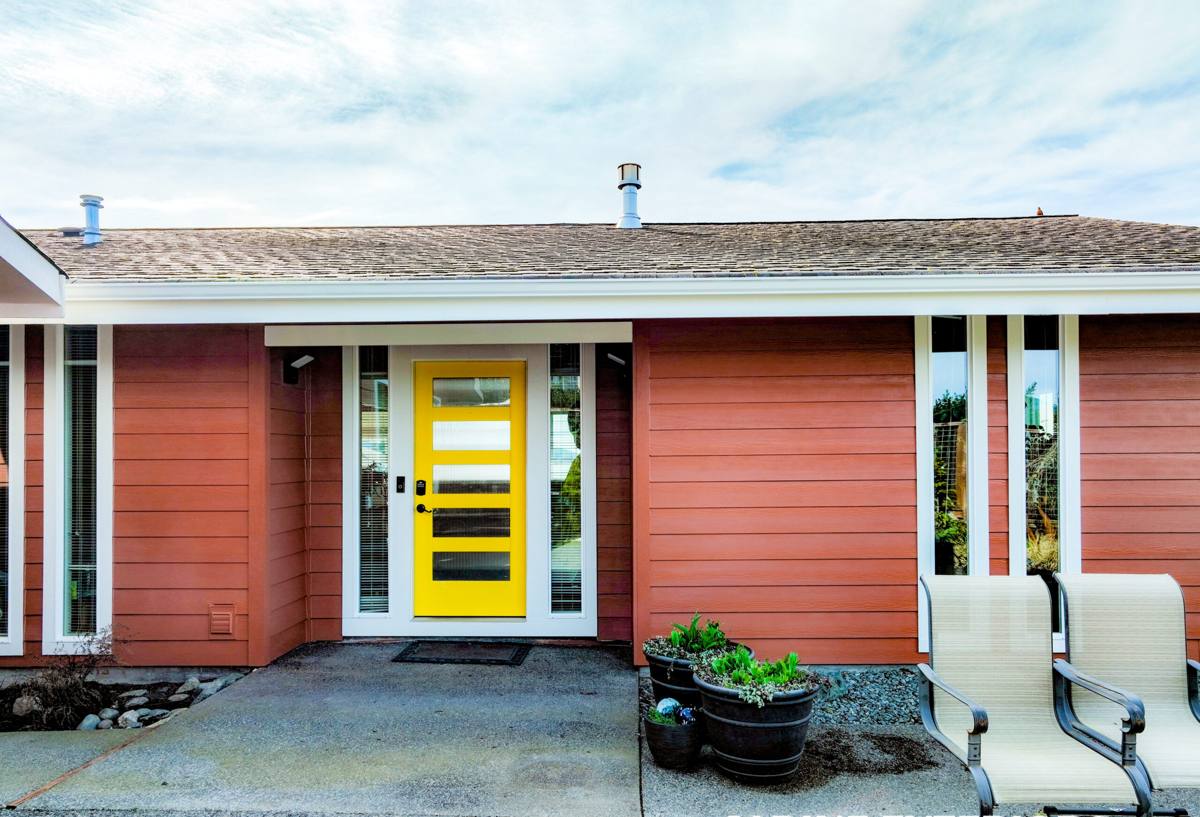
What James Hardie Siding Is Built to Handle
We install James Hardie fiber cement siding exclusively — not vinyl, not engineered wood, not cedar. In an environment like Sudden Valley's, the reasoning comes down to how a material behaves when it stays wet for days at a time and sits in shade instead of direct sun.
Fiber cement is made from cement, sand, and cellulose fibers, then cured into a rigid, dense board. It doesn't absorb water the way wood-based products do, it won't warp or delaminate from prolonged dampness, and it's non-combustible — a real consideration even on the wetter west side of the Cascades as Washington's fire seasons grow longer. Moss and algae can still grow on its surface in constant shade, same as they can on any siding, roof, or deck in this kind of setting, but the board itself isn't degrading underneath that growth the way untreated or engineered wood can.
HZ5 Engineering for the Pacific Northwest
James Hardie manufactures different HZ (HardieZone) formulations for different climates. Homes in Whatcom County fall into the HZ5 zone, engineered for regions with sustained moisture and freeze-thaw cycles rather than the drier, hotter HZ10 formulation used in the Southwest. That distinction matters more in a place like Sudden Valley than in a dry, open subdivision, because the product genuinely spends more of the year wet.
What a Correct Installation Actually Involves
James Hardie siding performs the way it's engineered to only when it goes on correctly. In a shaded, high-moisture setting like Sudden Valley, the installation details matter even more than usual, because there's less margin for a wall to dry out and recover from a mistake.
- A properly lapped water-resistive barrier behind the siding, with all penetrations (vents, hose bibs, light fixtures) flashed and sealed before the first board goes up
- Correct fastener type, spacing, and depth — Hardie is unforgiving of over-driven or under-driven nails, which can crack the board or leave gaps that trap moisture
- Proper clearance at the bottom edge, roofline, decks, and grade so the siding never sits in standing water or constant ground moisture
- Factory-cut or properly sealed field cuts at every joint, since an unsealed cut edge is one of the most common places fiber cement starts absorbing water
- Correct caulking and joint treatment at trim, corners, and window or door casings, using products compatible with Hardie's ColorPlus finish
Skipping any one of these usually doesn't show up right away. It shows up two or three years later as a soft spot, a stain, or a section that stays wet long after the rest of the wall has dried — which is often when a homeowner learns the installer cut a corner.
Our Process for Sudden Valley Projects
Every project starts with an on-site walk of the home, not a phone estimate. We look at sun exposure on each elevation, tree overhang, existing moisture damage, current siding condition, and drainage around the foundation before we talk product or price. In a tree-heavy neighborhood like this, the north and west walls often need different attention than the street-facing side, and that only becomes clear in person.
Gated Access and Community Review
Sudden Valley is a private, gated community with its own roads and homeowners' association. If your property falls under that association's architectural review process, exterior changes like re-siding may need approval before work starts. We're glad to help put together whatever's needed for that review — product spec sheets, color samples, and a written project scope — so it doesn't hold up your timeline. We also coordinate gate access ahead of time so crews and material deliveries aren't stuck waiting on day one.
Tear-Off, Prep, and Cleanup
Most re-side projects here involve removing the old siding down to the sheathing so we can actually see and fix what's underneath — rot, old flashing, compromised sheathing — rather than covering it up. We keep job sites contained given the wooded, often narrow lots typical of the area, and we don't leave debris or fasteners scattered where kids, pets, or lake-bound foot traffic pass through.
Choosing the Right Hardie Product and Color for a Shaded Lot
James Hardie's ColorPlus factory finish is baked on and backed by its own warranty against fading and peeling, which matters in a spot where a wall might not see direct sun for months at a time. Field-painted siding shows lap marks and uneven fading fast in low-light, high-moisture conditions; a factory finish holds its color far more evenly.
On color, darker tones read differently under tree canopy than they do on a paint chip in full sun — they can look almost black in deep shade. We walk homeowners through actual samples on-site, in their own light, rather than off a screen. On product line, HardiePlank lap siding is the standard choice for most Sudden Valley homes; HardieShingle is a common accent for gables or dormers on the more traditional, cabin-style homes around the lake; and HardieTrim finishes out corners, fascia, and window surrounds in a material that matches the siding's moisture behavior instead of fighting it.
Maintenance: What to Watch for in a Shaded, Moss-Prone Yard
Hardie siding needs less upkeep than wood or vinyl, but "less" isn't "none," especially under tree cover. A short seasonal check catches most problems while they're still cheap to fix.
- Rinse moss and algae buildup off shaded walls with a garden hose and soft brush — avoid high-pressure washing, which can force water behind panels or joints
- Keep gutters and downspouts clear of needles and leaf litter so water isn't overflowing onto the siding below
- Trim back branches and shrubs that keep siding in constant shade or brush against the wall in wind
- Check caulk lines at trim and window edges yearly — this is usually the first thing to fail, well before the siding itself
- Watch the bottom few feet of siding near grade, decks, and downspouts for staining, which usually means water is pooling somewhere it shouldn't
What Affects the Cost of a Sudden Valley Siding Job
Every home is different, but the same handful of factors drive most of the price difference between one Sudden Valley project and the next.
| Factor | Why It Matters Here |
|---|---|
| Extent of existing damage | Rot found under old siding on shaded walls adds sheathing and framing repair before new siding can go on |
| Access and lot terrain | Steep, wooded, or narrow driveways typical of the area can slow material staging and add labor |
| Product mix | Plank, shingle accents, and multiple trim profiles cost more than a single flat plank run |
| Tear-off vs. overlay | Full tear-off costs more upfront but is usually the right call once moisture has been an issue |
| HOA or design review requirements | Extra documentation or approved color restrictions can add planning time, though rarely material cost |
We give a written, itemized estimate after the on-site walk-through — not a ballpark number over the phone — so you know exactly what's driving the price before you decide anything.
Why a Crew That Already Works in Sudden Valley Matters
Siding contractors who only occasionally work out this way tend to learn the neighborhood's quirks on the homeowner's dime — the gate procedures, the tree-heavy lots, the moisture patterns that differ from a wide-open Bellingham subdivision. A crew that already works Sudden Valley regularly has already made those adjustments. We know to check north- and west-facing walls more carefully, we know gated communities often need advance notice for delivery trucks, and we know what normal moss growth looks like here versus a sign that water is getting in somewhere it shouldn't.
That familiarity also means accountability. We're not driving in from out of the area for a one-time job — we're a Bellingham-based crew that expects to be back in this neighborhood for the next project and the one after that, which is exactly the incentive we want driving how carefully a job gets done.
Get a Straight Answer on Your Siding
If your Sudden Valley home has moss buildup, soft spots, or siding that's simply worn out from years of shade and moisture, we'll walk the property, tell you honestly what we see, and put together a clear, itemized estimate — no pressure, no obligation. Use the form below to get started.