 Bellingham Exterior
 Siding Replacement Built for Sudden Valley's Conditions
Sudden Valley sits in a pocket of Whatcom County that puts extra demands on exterior siding. Homes here are typically wrapped in mature trees, sit close to Lake Whatcom, and see long stretches of shade that keep siding damp far longer after a storm than a house out in the open. Add in the driving rain that rolls through Bellingham for much of the year and the moss and mildew that come with a wet, shaded climate, and you have conditions that punish the wrong siding material — or the right material installed the wrong way. Salt-laden marine air off the greater Puget Sound region adds to the corrosion and moisture load across Whatcom County generally, and it compounds the problem for lake-adjacent, tree-covered lots like the ones common in Sudden Valley.
We've replaced siding on enough homes in this part of the county to know that a generic siding job doesn't hold up here. What follows is what we look for, what we do differently, and why we only stand behind one material for this climate.
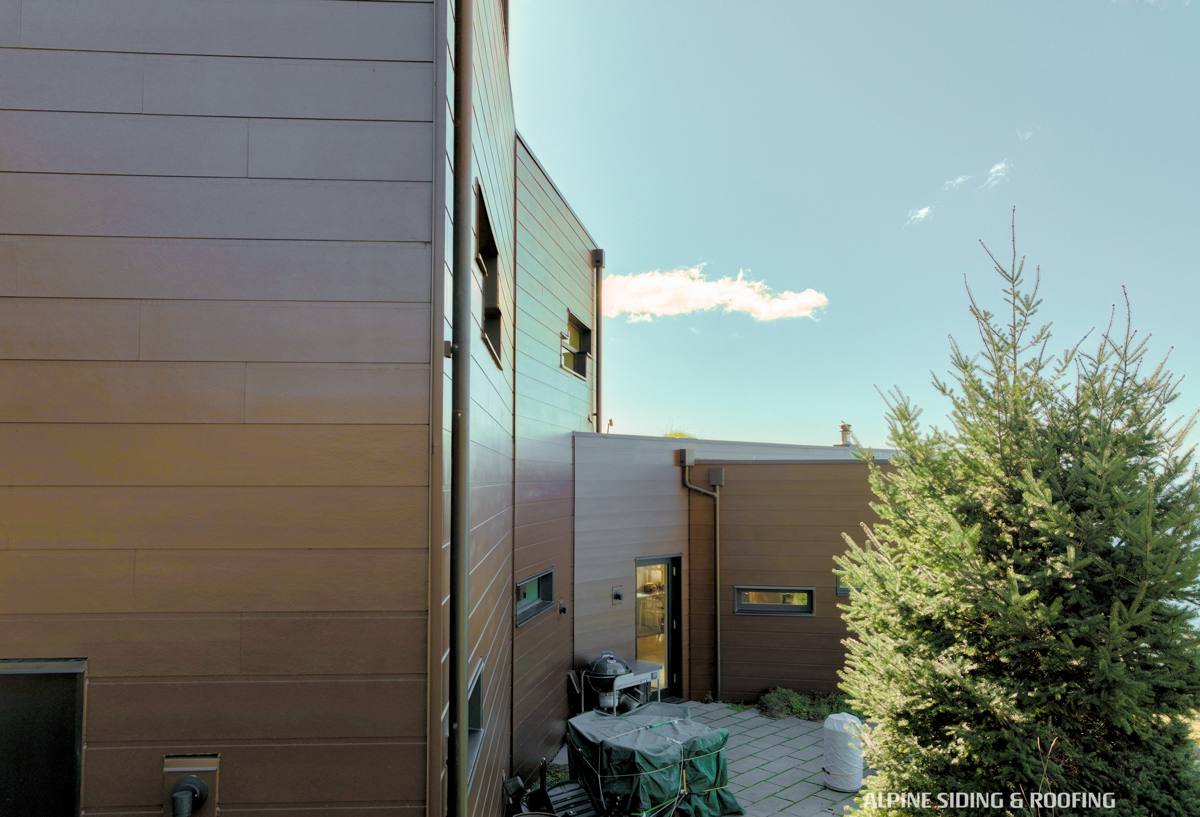
Why Sudden Valley Homes Wear Out Siding Faster
Shade and moisture that never fully dries
A house tucked under fir and cedar canopy loses the sun exposure that would otherwise dry out siding after rain. That constant dampness is exactly what moss, algae, and mildew need to take hold, and once established on wood-based or wood-look products, they hold moisture against the surface and accelerate rot from the back side, where you can't see it happening.
Driving rain and wind-driven water
Storms coming off the water don't just fall straight down — wind pushes rain sideways into laps, seams, and trim joints. Siding that isn't installed with the right overlap, flashing, and water-shedding detail will let that water behind the cladding, where it can sit against sheathing for weeks at a time given the region's humidity.
A long moss season
In much of Whatcom County, moss isn't a summer nuisance — it's close to a year-round tenant on north-facing and shaded walls. On some siding materials that means ongoing pressure-washing and repainting; on others it means the surface itself starts to degrade under the growth.
Signs Your Siding Needs Replacing, Not Patching
Homeowners often call us for a repair and end up needing a full replacement once we can see what's underneath. Here's what typically tips that decision:
- Soft, spongy, or crumbling spots when you press on the siding, especially near the bottom courses and around windows
- Paint that keeps failing within a year or two of repainting, even on surfaces that were properly prepped
- Persistent moss or dark streaking that returns within months of cleaning
- Visible cupping, warping, or separation at the seams and butt joints
- Bubbling or peeling near the bottom edge of boards, a sign moisture is wicking up from below
- Gaps that have opened at trim and corner boards, letting daylight or drafts through
- Interior signs — musty smells, staining on interior walls, or soft drywall near exterior corners
If more than a couple of these show up in a walk around the house, patching individual boards is usually a short-term fix that costs more over time than a full replacement done right the first time.
What a Correct Siding Replacement Actually Involves
Full tear-off and a real look underneath
We don't side over existing siding. A proper replacement starts with removing the old cladding down to the sheathing so we can actually see the condition of the wall — soft sheathing, rot around window openings, or old flashing mistakes only show up once the old siding is off, and every one of them needs to be corrected before new siding goes on.
Water-resistive barrier and flashing done in the right order
Every penetration — windows, doors, hose bibs, light fixtures, vents — needs to be flashed so water sheds down and out, never into the wall. The house wrap and flashing have to be layered correctly, shingle-fashion, so gravity is always working with the system, not against it. This is the step that matters most for a wet, wind-driven climate and the one most often shortcut on lower-bid jobs.
Fastening and clearances to manufacturer spec
Fiber cement siding has specific nailing patterns, fastener types, and minimum clearances from grade, roof lines, and decks. Skip these and you void the manufacturer's warranty and create the exact gaps that let moisture behind the boards — which, in a shaded, damp environment like Sudden Valley, shows up as rot within a few seasons instead of a few decades.
Trim, caulking, and paint details that actually shed water
Corner boards, window trim, and butt joints are where most siding failures start. Correct installation means factory-cut and factory-primed edges are sealed and painted per the manufacturer's instructions, not left exposed to soak up water at the cut ends.
Why We Install James Hardie — and Nothing Else
We install James Hardie fiber cement siding exclusively. We don't install vinyl, LP SmartSide, Cemplank, Allura, primed spruce, or cedar, and we think homeowners deserve an honest reason why, not just a sales pitch for what we happen to carry.
Vinyl
Vinyl is inexpensive and low-maintenance in mild climates, and it has a real place in the market. But it moves with temperature swings, its seams and J-channels are a common water entry point in wind-driven rain, and in a heavily shaded, damp environment it doesn't resist moss and mildew nearly as well as fiber cement — the grooved profile and soft surface give organic growth something to grip.
Wood and cedar
Cedar looks great and plenty of homeowners love the aesthetic. But real wood siding needs consistent refinishing, and in a climate with this much shade and moisture, that maintenance schedule tightens up fast. Skip a cycle and rot sets in at exactly the spots — butt joints, lower courses, north walls — that Sudden Valley's canopy keeps damp longest.
LP SmartSide, Cemplank, Allura, and other engineered wood or fiber cement competitors
These are legitimate manufacturers, and some perform reasonably well when installed correctly. Our standardization on James Hardie comes down to consistency: we know the HZ5 product line is engineered specifically for climates like ours, we know the ColorPlus factory finish holds up without repainting for a long stretch, and we know the warranty structure and installation documentation inside and out. Standardizing on one system means every crew member installs it the same correct way, every time, rather than juggling different nailing patterns and clearances across brands.
What James Hardie gets right for this climate
Hardie's HZ5 line is formulated for the Pacific Northwest's wet weather. It's non-combustible, it doesn't swell or rot the way wood-based products can, and the ColorPlus finish is baked on at the factory under conditions a jobsite paint job can't match — which matters when a home is going to spend most of the year damp and shaded. It also carries a strong, transferable warranty, which matters to homeowners who plan to sell.
Comparing the Options
| Material | Moisture & moss resistance | Maintenance | Typical lifespan | Our position |
|---|---|---|---|---|
| James Hardie fiber cement (HZ5) | Excellent — engineered for wet climates | Occasional wash, no repainting for a long stretch with ColorPlus | Decades when installed to spec | What we install |
| Vinyl | Fair — seams and channels trap moisture, moss grips grooved texture | Low, but limited repair options when damaged | 15-25 years, shorter in shaded/wet spots | Not installed |
| Cedar / wood | Poor without diligent upkeep | High — regular refinishing required | Variable, heavily maintenance-dependent | Not installed |
| LP SmartSide / other engineered wood | Good if maintained; edge sealing is critical | Moderate — edge and joint maintenance matters | Manufacturer-dependent | Not installed |
Our Process, Start to Finish
1. On-site assessment
We walk the exterior, check soft spots, look at trim and window details, and talk through what we're seeing and why.
2. Written scope and estimate
You get a clear, itemized estimate — what's being torn off, what siding and trim are going on, and what's included in prep and cleanup.
3. Tear-off and sheathing inspection
Old siding comes off, sheathing gets inspected, and any rot or damage gets addressed and documented before we move forward.
4. Weather barrier, flashing, and Hardie installation
House wrap, flashing, and James Hardie siding go on per manufacturer spec, with correct fastening, clearances, and trim details.
5. Final walkthrough
We walk the finished job with you, point out what was done and why, and answer any questions before we call it complete.
What Affects Cost on a Sudden Valley Property
Every job is different, but a few things consistently move the price on homes in this area:
- How much hidden rot is found once old siding comes off — this is the single biggest cost variable on older homes
- Site access — wooded, sloped, or lake-adjacent lots can limit staging and equipment access
- How much trim, window, and corner detail work the home has
- The condition and completeness of the existing house wrap and flashing
- Home size and number of stories
We give a firm, written number after we've actually looked at the house — not a phone quote — because on a home with this much tree cover and moisture exposure, guessing at hidden damage does homeowners a disservice.
Why Local Experience in Sudden Valley Matters
A crew that's worked this specific area knows what to expect before the tear-off even starts: which orientations tend to hide moisture damage, how tree cover changes drying time, and what the wind-driven rain pattern off the lake does to unprotected seams. That's the difference between a contractor pricing from a generic checklist and one who already knows where to look. We've built our process around Whatcom County's climate specifically, not adapted a warm-climate playbook to a wet one.
If your siding is showing wear, or you just want an honest opinion on whether it's a repair or a replacement, we're happy to take a look. Fill out the form below for a free, no-pressure estimate — we'll tell you what we actually see, not just what sounds good.