 Bellingham Exterior
 Storm Damage Roof Repair Built for Sudden Valley Conditions
Sudden Valley sits in a pocket of Whatcom County that takes weather differently than the flatter parts of Bellingham. The gated community wraps around the south shore of Lake Whatcom, surrounded by tall fir and cedar stands, with homes tucked into wooded lots at varying elevations. That setting is a big part of what makes the neighborhood desirable — and it's also exactly why roofs here take a different kind of beating during Pacific storm systems. Wind gets funneled and redirected by the terrain and tree cover, rain sits on shaded roof sections longer than it would in open areas, and the moss season runs longer than almost anywhere else in the county.
When a storm rolls through, the damage isn't always the dramatic kind. Sometimes it's a handful of lifted shingles on a north-facing slope, a bent piece of flashing near a chimney, or water finding its way through a spot that looked fine from the ground. This page covers what storm damage repair actually involves for a Sudden Valley home, what a correct repair looks like, and how we approach the work.
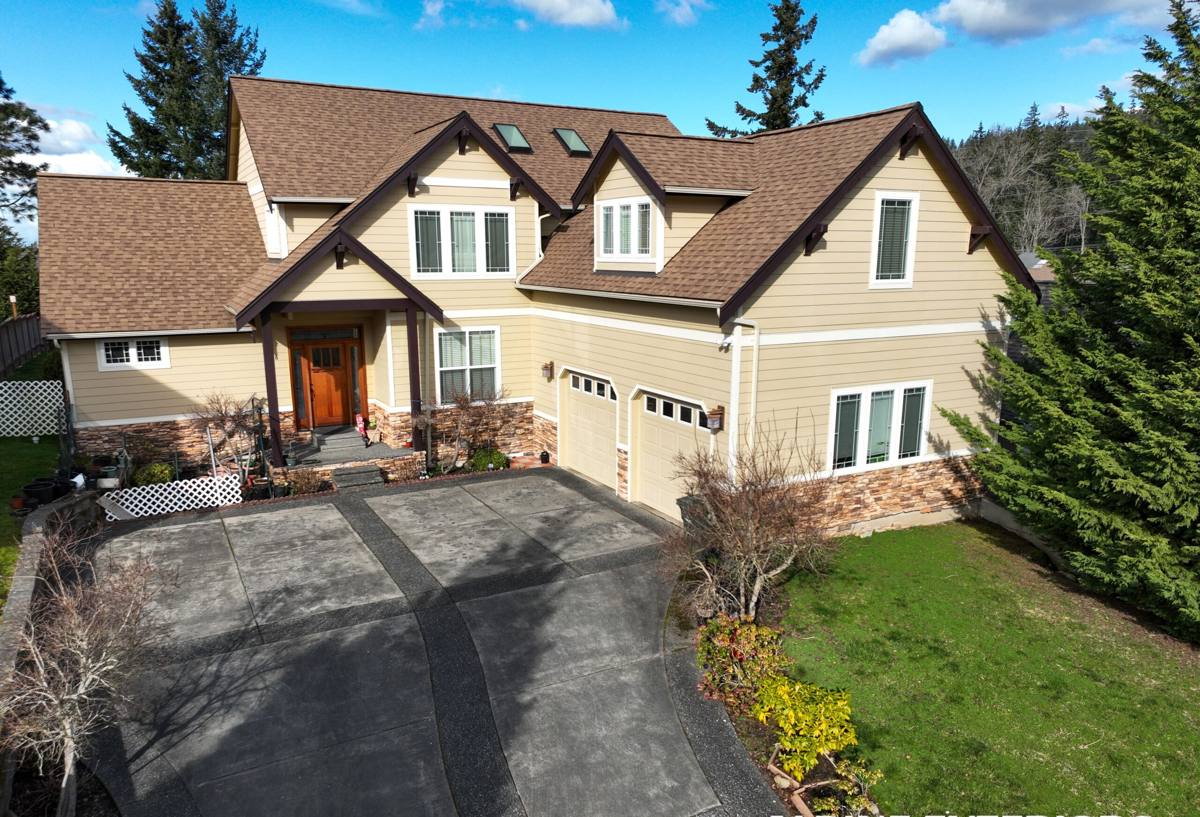
Why Sudden Valley Roofs Take a Different Kind of Beating
Wind funneled by the lake and the trees
Open water on one side and dense timber on the other create uneven wind patterns. Instead of a steady gust hitting a roof evenly, wind around Lake Whatcom tends to swirl and hit roof edges, ridges, and valleys from shifting directions during the same storm. That's often where you'll find lifted or creased shingles after a windstorm — not across the whole roof, but concentrated at the edges, ridge caps, and any place the roofline breaks.
Shade, moisture, and a long moss season
Marine air moving in off Bellingham Bay and the Salish Sea keeps the whole region damp for much of the year, and the tree canopy around Sudden Valley adds to it — roof sections that sit in shade most of the day simply don't dry out between rain events the way a roof in an open subdivision would. That extended dampness is what feeds moss and moisture retention, and it's a big reason storm damage here often shows up alongside pre-existing wear: a shingle that was already softened by months of trapped moisture fails faster once a storm puts extra stress on it.
Debris from wind-thrown limbs and needles
Roofs surrounded by mature trees deal with more than wind and rain. Windstorms knock down branches and limbs, and even when nothing punctures the roofing, the impact can crack shingles, dent flashing, or knock granules loose in ways that aren't obvious from the ground. Needle and debris buildup in valleys and around penetrations also traps water after a storm passes, which can turn a minor issue into a leak if it's not cleared.
What Counts as Storm Damage (And What Doesn't)
Not everything that looks bad after a storm is actually storm damage, and not everything that needs fixing looks dramatic. Being able to tell the difference matters both for repair planning and for insurance purposes.
- Typically storm-related: creased or torn shingles, missing shingles or tabs, bent or lifted flashing, impact marks from falling debris, granule loss concentrated after a specific weather event, damaged gutters or downspouts pulled loose by wind.
- Usually gradual wear, not storm damage: curling shingles across the whole roof, widespread moss growth, cracked pipe boots from age and UV exposure, general granule loss spread evenly over an older roof.
- Gray area that needs a trained eye: a roof that was already near the end of its service life before the storm hit, where the storm accelerated a failure that was coming anyway.
That last category comes up often in Sudden Valley because of how long moss and shade moisture work on a roof before anyone notices. An honest inspection tells you which bucket your damage actually falls into, rather than labeling everything "storm damage" to make a claim easier.
The Hidden Damage Homeowners Miss
Wind-driven rain intrusion
During a strong storm, rain doesn't just fall straight down — it drives sideways under ridge caps, around chimney flashing, and into any gap that a calm-weather rain would never reach. This is one of the most common ways a roof that "looks fine" ends up with a stain on a ceiling two or three storms later. The entry point and the stain are rarely in the same spot, which is why tracing a leak on a wooded, multi-plane roof takes real experience.
Granule loss and shingle bruising
Wind-blown debris and hail-adjacent weather can knock granules off a shingle or bruise the mat underneath without tearing it. The shingle keeps shedding water for a while, but its lifespan has been shortened, and the exposed asphalt underneath starts breaking down faster under UV and moisture. This kind of damage is easy to miss from the ground and is one of the main reasons we walk the actual roof surface rather than inspecting from a ladder at the eave.
Flashing that shifted but didn't fail — yet
Flashing around chimneys, skylights, and roof-to-wall transitions can be knocked slightly out of position by wind without an obvious gap opening up right away. Sealant that looked fine before the storm may now be under more stress than it can handle through the next few rain events. Catching this early is a small repair; catching it a year later after it's leaked into the wall is not.
Our Storm Damage Repair Process
1. Inspection and documentation
We inspect the full roof surface, not just the areas that look obviously damaged, and document what we find with photos before any repair work starts. For wooded, multi-elevation properties like most in Sudden Valley, that often means checking areas shaded by trees separately from sun-exposed slopes, since they age and fail differently.
2. Emergency mitigation when needed
If a storm has left an active leak or exposed decking, stopping water intrusion comes first. Temporary tarping or sealing protects the interior of the home while a permanent repair is planned properly, rather than rushed.
3. Repair scope and a straight answer on repair vs. replace
Most storm damage is repairable without replacing the whole roof. We'll tell you plainly when a repair makes sense versus when the roof's overall condition means a repair would just be a short-term patch on a system that's already near the end of its life. That distinction matters most on older roofs where storm damage and years of moss-related wear are layered on top of each other.
4. The repair itself
Depending on scope, this might mean replacing individual shingles and matching them to the existing roof, resetting or replacing flashing, resealing penetrations, or repairing a section of decking if water has gotten underneath. We match materials as closely as possible so a repair doesn't stand out as an obvious patch.
Repair Scope and What Drives the Cost
Storm repair costs vary a lot depending on scope, roof pitch, tree cover over the work area, and how much of the damage is hidden versus surface-level. This table gives a general sense of scope — actual pricing depends on what we find during inspection.
| Repair Type | Typical Scope | What Drives the Price |
|---|---|---|
| Spot shingle repair | A handful of missing or damaged shingles in one area | Accessibility, roof pitch, matching existing shingle color/age |
| Flashing or valley repair | Resealing or replacing flashing at chimneys, valleys, or wall transitions | Number of penetrations, extent of any decking damage underneath |
| Partial section replacement | One slope or roof plane re-covered | Square footage, underlayment condition, tree-cover access for equipment |
| Full storm-damage re-roof | Whole roof, usually when storm damage compounds existing age/wear | Total square footage, roof complexity, material choice, decking condition |
Working With Your Insurance on a Storm Claim
If the damage is significant enough to involve your homeowner's insurance, documentation matters more than almost anything else in the process. An adjuster is working from what they can see and what's written down — a clear, photographed record of the damage, tied to a specific storm event, is what supports a fair claim outcome. We provide that documentation as part of the inspection and can walk the roof with an adjuster if that's useful.
One thing worth saying plainly: after any regional storm, it's common for out-of-town crews to go door-to-door in affected neighborhoods offering free inspections and pushing for a signature on the spot. There's nothing wrong with a free inspection, but a rushed decision on something as significant as roof work rarely serves the homeowner. Take the time to get a clear, documented answer before committing to a repair scope.
Why Local Experience in Sudden Valley Matters
A roofing crew that only sees a property once, on the day of the repair, is working with less information than one that understands the neighborhood's conditions generally — the way tree cover holds moisture on certain slopes, how wind tends to move across a lakeside, wooded lot, and how long moss has typically had to work on a roof before a storm hits. That context shapes both the inspection and the repair decision. It also matters for access: many homes here have roof sections that are shaded, steep, or hard to reach without careful staging around mature trees, and that changes how a repair should be approached.
We also think it matters to be straightforward about scope. Not every storm-damaged roof needs full replacement, and not every "storm damage" claim is actually storm-caused. Our job is to give you an accurate read on which is true for your roof, then do the repair correctly — matched materials, proper flashing technique, and no shortcuts on the parts that are hard to inspect after the fact.
After the Storm: A Homeowner's Checklist
- Walk the yard and check for shingle fragments, granules, or pieces of flashing on the ground before cleaning up debris.
- Check gutters and downspouts for a buildup of dark granules, which can indicate accelerated shingle wear.
- Look at the roofline from the ground for shingles that are visibly lifted, curled, missing, or a different color/shade than the surrounding area.
- Check the attic (if accessible) for new water stains, damp insulation, or daylight coming through the decking.
- Photograph any visible exterior damage before you do cleanup, in case it's needed for an insurance claim.
- Avoid signing a repair or replacement contract with anyone until you've had an independent inspection you trust.
- Address a confirmed leak quickly — even a small one can lead to decking damage or interior repairs if it sits through a few more storms.
If a recent storm has left you with damage, questionable spots, or just uncertainty about your roof's condition, we're happy to take a look. We offer free, no-pressure estimates for Sudden Valley homeowners — no obligation, and a straight answer about what your roof actually needs. The form below is the easiest way to get started.