 Bellingham Exterior
 Window Installation Built for Cordata's Weather
Cordata sits in north Bellingham, close enough to the water and open farmland that homes here take a steady beating from the elements most of the year. Driving rain off the Salish Sea, salt-laden air, and a moss season that can stretch from October into May all work against window assemblies that weren't installed with this climate in mind. A window that performs fine in a drier inland market can fail early here if the flashing, sealant, and drainage details aren't right. That's the difference between a window installation that lasts fifteen years and one that lasts thirty-five.
We install windows throughout Whatcom County, and Cordata's mix of housing stock — older single-family homes, newer developments near the retail corridor, and everything from the 1970s through today — means we see a wide range of window conditions on every street. What doesn't change is the climate they all have to stand up to.
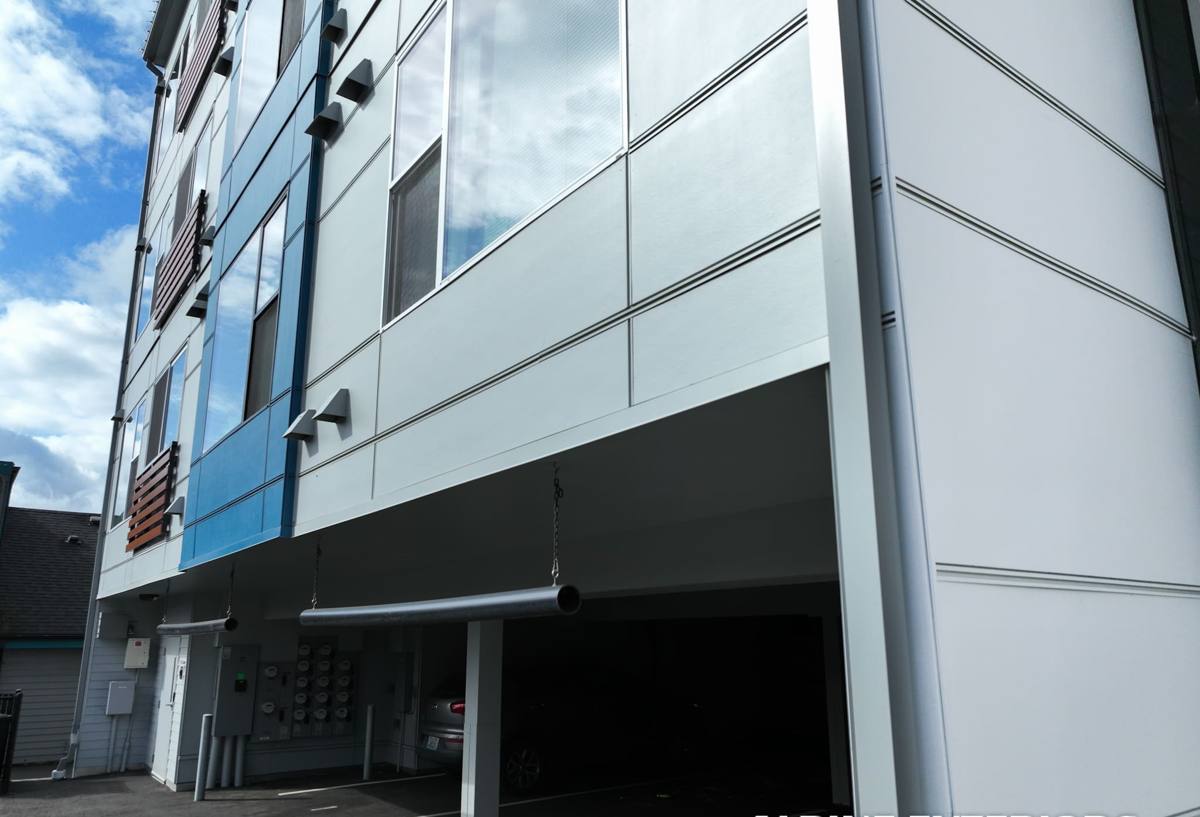
Why Cordata Homes Wear Out Windows Faster
Driving Rain and Wind-Driven Moisture
Bellingham's weather doesn't just rain straight down — wind off Bellingham Bay and the Strait pushes rain sideways into window openings, especially on west- and south-facing walls. If a window wasn't flashed correctly at the time of install, that wind-driven moisture finds its way behind the trim and into the wall cavity. You won't see it right away. You'll see it two or three years later as soft trim, bubbling paint, or a musty smell near the window.
Salt Air and Metal Fatigue
Being close to Puget Sound means airborne salt settles on everything, including window hardware. Cheap or improperly finished aluminum and steel components corrode faster here than they would inland. Locks stick, hinges seize, and weep holes clog with corrosion debris — which then traps water instead of draining it.
Moss, Algae, and Prolonged Dampness
Whatcom County's long wet season keeps north-facing and shaded window sills damp for months at a time. That dampness feeds moss and algae growth on sills and in corners where water should be draining but isn't. Over time, organic growth holds moisture against wood and vinyl surfaces, accelerating rot and seal breakdown in exactly the spots where a window is supposed to be watertight.
What a Correct Window Installation Actually Involves
A lot of window problems we get called out to fix in Cordata aren't a bad window — they're a poorly installed good window. The unit itself is usually fine. The flashing, the sealant, the shimming, and the drainage path around it were not done to a standard that holds up to this climate. Here's what we consider non-negotiable on every install:
- Proper flashing sequence — sill pan first, then side flashing lapped correctly, then head flashing last, so water sheds down and out instead of pooling
- A sloped sill pan under every window opening, not just a bead of caulk, so any water that gets past the window has somewhere to go
- Correct shimming at load points so the window frame isn't twisted or racked, which stresses the seals and shortens their life
- Compatible sealants and flashing tapes — mixing incompatible materials is a common cause of premature adhesive failure in wet climates
- Weep holes and drainage paths left clear and functional, not accidentally sealed shut during installation
- Insulation packed correctly around the frame — not so tight it bows the frame, not so loose it leaves gaps for air and moisture
- Interior air sealing completed before trim goes back on, so conditioned air isn't leaking into the wall cavity and causing condensation
Skip any one of these steps and the window may look fine and even test fine on day one. The failures show up in year two through five, usually as rot, staining, or a draft that wasn't there before.
Choosing the Right Window for a Cordata Home
There's no single "best" window brand or material — the right choice depends on the home's exposure, age, and how the owner wants to maintain it long-term. What we won't do is install a product we know performs poorly in this specific climate just because it's cheaper or trending. Here's an honest breakdown of the main options:
| Frame Material | How It Handles Our Climate | Maintenance | Typical Lifespan |
|---|---|---|---|
| Vinyl | Good moisture resistance, doesn't corrode from salt air, stable in our temperature range | Low — occasional cleaning | 20-30 years |
| Fiberglass | Excellent dimensional stability in wet/dry cycling, holds paint well, resists warping | Low | 30-40+ years |
| Wood-clad | Good performance if cladding and flashing details are done right; vulnerable where cladding is compromised | Moderate — watch for seal failure at joints | 20-30 years with upkeep |
| Aluminum | Prone to condensation and corrosion near salt air unless thermally broken and properly finished | Moderate to high | Varies widely by quality |
We tend to steer Cordata homeowners toward vinyl or fiberglass for most applications because they hold up to wind-driven rain and salt air with the least ongoing maintenance. Wood-clad windows can still be the right call for a specific look or a historic home, but we're upfront that they demand more attention to the cladding seams over time — that's a maintenance trade-off, not a defect, and it's one homeowners should decide on with full information.
Our Installation Process
1. On-Site Assessment
We look at existing window condition, framing, siding type, and exposure — a window on an exposed west wall gets treated differently than one tucked under an eave. We check for existing rot or moisture damage before quoting, because that changes the scope.
2. Product Selection
We walk through frame material, glass package, and hardware options based on the home's exposure and the owner's budget and priorities — energy performance, noise reduction, maintenance level, or all three.
3. Removal and Opening Prep
Old windows come out carefully to avoid unnecessary damage to surrounding siding and trim. We inspect the opening for hidden rot or water damage at this stage, since it's often the only time it's fully visible.
4. Flashing and Sill Pan Installation
This is the step that determines whether the window survives our wet season. Sloped sill pan, correctly lapped flashing, and compatible materials throughout — every time, not just when it's convenient.
5. Setting, Shimming, and Fastening
The window is set plumb, level, and square, shimmed at manufacturer-specified points, and fastened without over-driving screws that can distort the frame.
6. Insulation and Air Sealing
Gaps are filled with appropriate low-expansion foam or backer rod and sealant — never packed so tight it bows the jamb.
7. Exterior Trim, Caulking, and Final Check
Trim goes back on, exterior caulking is applied at the right joints (not everywhere — over-caulking can trap water as easily as under-caulking), and we do a final operational check on every window before we call the job done.
Signs a Cordata Home Needs New Windows Now
- Visible fog or moisture between glass panes (failed seal)
- Soft, discolored, or spongy trim or sill around the window
- Windows that are difficult to open, close, or lock
- Persistent drafts even with the window fully closed
- Visible mold, moss, or algae growth on interior or exterior sills
- Condensation forming on interior glass regularly during cooler months
- Noticeably higher heating costs without another clear explanation
If you're seeing more than one of these, it's worth having someone look at the opening itself, not just the window unit — the underlying flashing and framing condition drives the actual scope of the fix.
Cost Factors for Window Installation in Cordata
| Factor | Why It Affects Cost |
|---|---|
| Number of windows | Per-window cost typically drops with larger jobs due to shared setup and mobilization |
| Frame material and glass package | Vinyl is generally the most budget-friendly; fiberglass and wood-clad cost more upfront |
| Existing wall/framing condition | Hidden rot or water damage found during removal adds repair scope before the new window goes in |
| Window size and configuration | Custom sizes, large picture windows, and multi-panel assemblies take more labor and material |
| Exposure and access | Second-story or hard-to-access openings take longer and may require additional equipment |
We give a firm number after seeing the actual openings — we don't quote sight-unseen because hidden framing condition is too big a variable to guess at responsibly.
Why Hire a Crew That Already Works Cordata
Window installation looks similar everywhere on paper, but the details that make it hold up in Whatcom County are learned from doing it here repeatedly — not from a general contractor's manual. A crew that works Cordata regularly already knows which wall orientations take the worst of the wind-driven rain, how the local moss and algae growth behaves against different sill materials, and what flashing sequence actually keeps water out through a full Bellingham winter. That local pattern recognition is what separates a window install that needs revisiting in three years from one that doesn't get thought about again for decades.
We stand behind our installation work and use materials and techniques matched to this specific climate — not a generic install spec pulled from a drier region.
Get a Free, No-Pressure Estimate
If your Cordata home has windows showing wear, drafts, or moisture issues — or you're planning ahead for a replacement — we're happy to take a look and give you a straightforward assessment. Use the form below to request a free estimate; there's no pressure and no obligation.